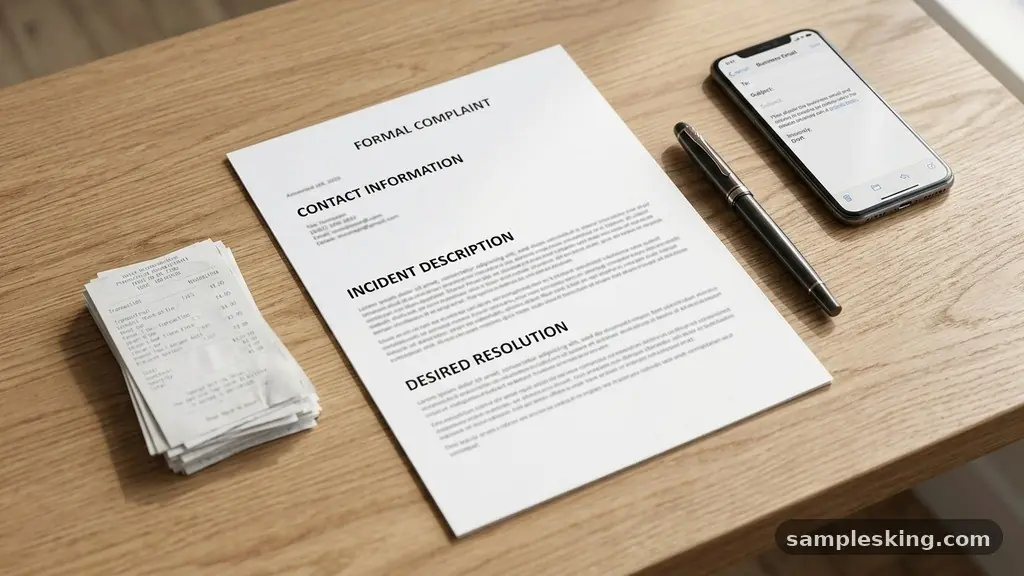
Learning the art of writing an Effective Complaint Letter With Examples is a vital skill for any consumer. Whether you are dealing with defective merchandise or a service failure, a well-crafted letter can turn a frustrating situation into a successful resolution. By maintaining a professional tone and providing clear documentation, you increase your chances of getting a refund or a formal apology.
This article provides the structural tools and specific strategies you need to communicate your concerns clearly. You will discover how to organize your thoughts, present evidence, and demand the outcome you deserve while protecting your consumer rights.
The Core Components of a Successful Complaint
The most important element of any formal correspondence is clarity. When you begin writing, state your purpose immediately in the first paragraph.
Include the date of the transaction, the location of the purchase, and any relevant account or order numbers. This immediate context allows the customer service representative to pull your file without delay.
Never bury your main point in a long narrative about how you felt. While your frustration is valid, the person reading the letter needs facts to process a resolution.
Stick to a chronological account of the service failure or the issue with the item. Keep this section brief, focusing only on the events that directly led to your complaint.
Include a clear request for action at the end of your letter. Do not assume the company knows what you want; specify whether you are seeking a refund, a replacement, or a repair.
Providing a clear resolution timeline also helps manage expectations. If you are waiting for a response, state a reasonable period, such as ten business days, before you plan to follow up.
Structuring Your Argument for Maximum Impact
A professional tone is your strongest asset when documenting a grievance. Avoid aggressive language, sarcasm, or personal attacks against staff members.
These reactions often cause the reader to become defensive, which works against your goal. Instead, frame your complaint as a missed expectation regarding the quality or service you paid for.
Organize your letter with clear, logical transitions. Start with the “what” and “where,” move to the “why” the product or service was unacceptable, and finish with the “how” you want it fixed.
If you have had previous interactions, mention them briefly. Include the names of any representatives you spoke with and the dates those conversations took place.
Consider the following table to help organize your supporting information before you begin drafting your letter. Having these details ready makes the process much faster and more accurate.
| Information Category | What to Include |
|---|---|
| Transaction Details | Receipt number, date, and store location |
| Product/Service ID | Serial numbers, model names, or account IDs |
| Evidence | Photos, emails, or chat logs |
| Desired Outcome | Refund, replacement, or service credit |
Gathering Your Evidence Documentation
Your claim is only as strong as the evidence you provide. Before sending your letter, assemble all relevant documents, including receipts, warranty cards, and photographs of the damage.
If you are reporting defective merchandise, clear images of the fault are often more convincing than a lengthy description. Keep copies of everything you send, as you may need them for future reference.
Do not send original documents to the company. If you are mailing a physical letter, include high-quality photocopies or scans.
Digital correspondence should include attachments that are clearly labeled, such as “Receipt_Order123.pdf” or “Damage_Photo_1.jpg.” This level of organization signals to the company that you are serious and prepared to escalate the issue if necessary.
If you have communicated via phone, keep a detailed log of those calls. Record the name of the agent, the time of the call, and a brief summary of what was promised.
If the issue is complex, you can find further guidance on your legal standing through the official government portal for consumer protection. Linking your complaint to established standards of conduct often encourages companies to prioritize your request.
Drafting Your First Example: Defective Merchandise
When you receive a product that does not work, your letter should be firm but polite. Start by identifying the product name and the date of purchase.
Explain exactly how the item failed to meet the advertised standard. Avoid vague complaints like “it is broken” and instead describe the specific malfunction.
Mention your attempt to use the product correctly and any troubleshooting steps you already performed. This shows you have acted in good faith.
If the item is under a warranty claim, explicitly state that you are invoking your rights under that agreement. This legal framing often triggers a faster internal review process.
End the letter by proposing a specific solution. For example, request a full refund to your original payment method or a pre-paid shipping label for a return.
Being specific prevents the company from offering a less desirable solution, such as a store credit, unless that is acceptable to you. Always include your contact information clearly at the bottom.
Drafting Your Second Example: Service Failure
Service complaints require a focus on the timeline and the specific gap in expectations. If you booked a service that was not delivered, outline the booking details and the time the service was meant to occur.
Explain the impact the failure had on your day or your business. This context helps the company understand the weight of the inconvenience.
Focus on the discrepancy between what was promised and what was provided. Did you pay for a premium service that was delivered at a basic level?
Did a technician fail to show up for an appointment? Be precise about these failures to make your case undeniable.
Request a tangible resolution that restores the value you lost. If you paid for a service that was never rendered, a full refund is the standard expectation.
If the service was poor, you might ask for a partial refund or a service credit for future use. A professional tone here is essential, as you are aiming for a resolution rather than a confrontation.
Common Mistakes to Avoid
Many people fail in their attempts to resolve a dispute because they become emotional. While anger is a natural reaction to bad service, it rarely results in a favorable outcome.
Avoid using all-caps, exclamation points, or threatening language. These elements make your letter look like a rant and reduce the likelihood that a manager will take you seriously.
Another common mistake is providing too much irrelevant information. The person reviewing your letter is likely busy and will appreciate brevity.
Focus strictly on the facts of the transaction and the nature of the error. If you write three pages of personal grievances, the core message will be lost.
Finally, do not forget to include your contact details. It sounds obvious, but many people send letters without a phone number or email address.
Ensure that your return address is correct and that your phone number is easily found. If the company needs to reach you to process a refund, they should not have to hunt for your information.
How to Follow Up Effectively
Sending the letter is only the first step in the process of dispute resolution. If you do not hear back within your specified timeframe, it is time to follow up.
A polite, firm email or phone call is usually sufficient to get the ball rolling. Reference your original letter and the date it was sent.
If you still receive no response, you may need to escalate the matter. Consider reaching out to the company via social media, as public inquiries are often monitored more closely.
You can also file a complaint with the Better Business Bureau if the company is a member. These steps show that you are persistent and that you understand the avenues available for consumer protection.
Keep a record of all follow-up attempts. If you call, note the time and the name of the person you spoke with.
If you email, save the thread. This documentation is essential if you ever need to involve a third party, such as a credit card company, to initiate a chargeback for a service failure.
Essential Tips for Success
To ensure your efforts in writing an Effective Complaint Letter With Examples yield results, keep these best practices in mind:
- Always use a clear, professional subject line if emailing.
- Keep your language neutral and objective at all times.
- Include your transaction reference number in the first two sentences.
- Attach copies of evidence, never original receipts.
- State your desired resolution clearly and concisely.
- Follow up if you do not receive a response within ten business days.
These steps help you stay in control of the situation. By acting systematically, you remove the stress from the process and focus purely on the facts.
Remember that most companies want to resolve issues to maintain their reputation. Your letter is simply a bridge to that resolution.
Frequently Asked Questions
Should I send my complaint via email or physical mail?
Email is generally faster and provides an automatic timestamp for your correspondence. However, if the issue involves a legal dispute or a high-value item, sending a physical letter via certified mail can provide proof of delivery that an email cannot.
What if the company ignores my letter?
If you have received no response after a follow-up, you may need to escalate. You can contact your local consumer protection agency, file a dispute with your credit card issuer, or leave a public review on a reputable platform.
Do I need to hire a lawyer for a complaint?
In most cases, you do not need legal representation for standard consumer issues. Most companies have internal processes to handle these complaints, and clear, firm communication is usually enough to trigger them.
How long should I wait for a response?
A standard resolution timeline is typically seven to ten business days. If you haven’t heard back by then, a polite follow-up is appropriate and encouraged to ensure your letter didn’t get lost in the shuffle.
Is it okay to use a template for my letter?
Using a template can help you structure your thoughts, but you must personalize it. A generic, copy-pasted letter is easy for a company to ignore; a specific, detailed letter about your unique purchase history is much harder to dismiss.
Writing an Effective Complaint Letter With Examples serves as a powerful way to assert your rights as a consumer. When you approach a grievance with a calm, organized, and factual mindset, you transform a negative experience into an opportunity for accountability. By clearly stating your purchase history and identifying the specific service failure, you provide the company with exactly what they need to fix the mistake.
Always remember that your tone is as important as your documentation; staying professional ensures your voice is heard above the noise. Use the structure and tips provided here to draft your next correspondence, and you will likely find that companies are far more responsive when they are presented with a well-prepared case. If you need further support, do not hesitate to reach out to local consumer agencies to ensure your rights are fully protected.