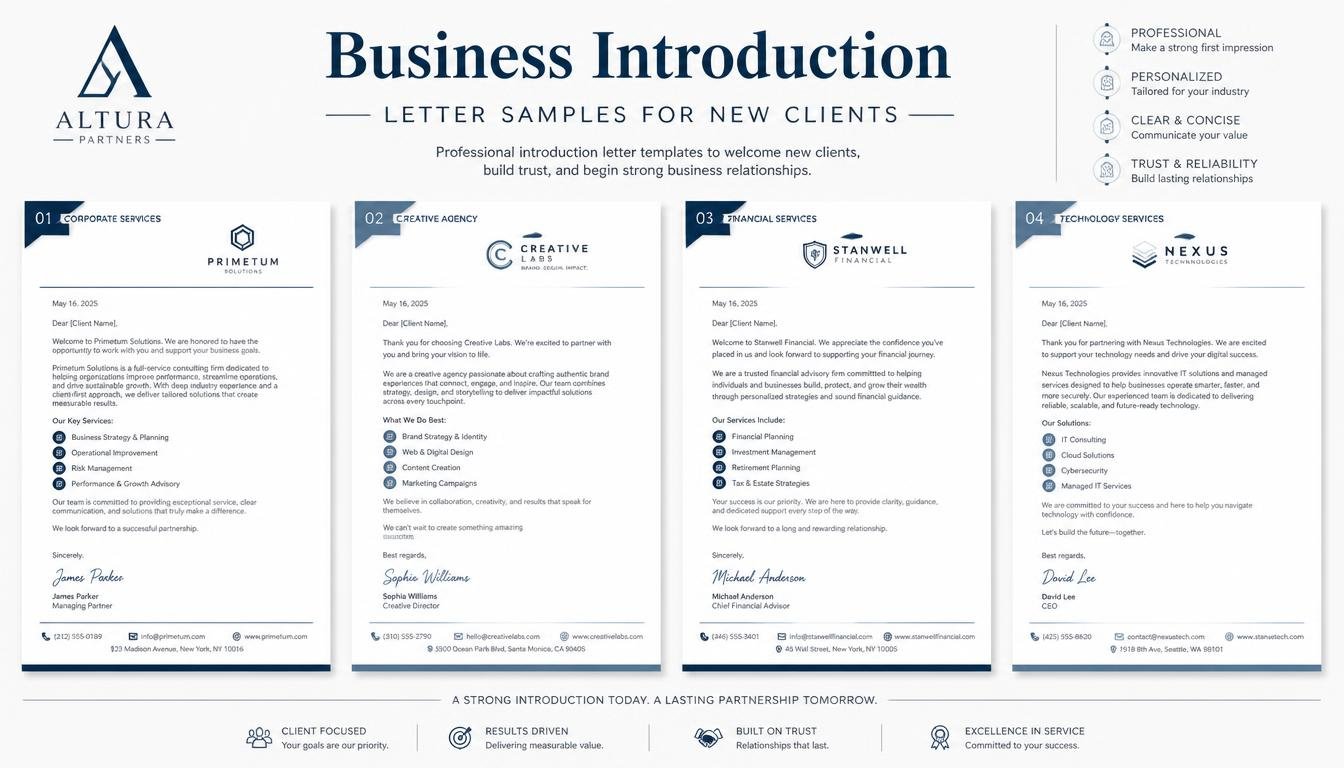
Finding effective business introduction letter samples for new clients is the first step toward building a sustainable professional network. When you reach out to a prospect, you are essentially asking them to invest their most limited resource: their time. A well-crafted introduction bridges the gap between cold outreach and a warm, productive conversation by addressing their needs directly.
By focusing on the recipient’s pain points rather than just your own service offerings, you significantly increase the likelihood of a response. This article provides actionable insights and templates to help you structure your outreach, refine your messaging, and ultimately secure more client meetings.
The Core Objectives of an Initial Outreach
An effective introduction letter should not aim to close a sale in the first paragraph. Instead, it serves to pique interest and establish a baseline of credibility.
Your primary objective is to demonstrate that you have done your homework on the prospect’s specific challenges. By doing this, you differentiate yourself from the generic, automated spam that fills most business inboxes today.
When you clarify your value proposition, you make it easy for the client to understand what is in it for them. Avoid using jargon or overly complex sentences that obscure your intent.
A clear, concise message shows respect for the reader’s time and signals that you are a professional who values efficiency. Success in this stage is measured by the transition from a cold lead to a scheduled discovery call.
Strategies for High Conversion Rates
Achieving high conversion rates depends largely on how you frame your offer. Rather than listing every single service you provide, focus on one specific outcome that the client cares about.
This is often tied to a recent milestone, such as product launches or funding rounds, which indicate that the company is in a growth phase. Mentioning these events demonstrates that you are paying attention to their business trajectory.
Research-Driven Customization is the single most important factor in improving your response rates. Spend five minutes scanning their website, their recent LinkedIn activity, or any relevant official business guidance resources to find a hook.
If you can reference a specific challenge they mentioned in a recent interview or a project they completed, your letter will stand out. People are naturally inclined to respond to those who show a genuine interest in their work.
Tone and Style Best Practices
The tone of your communication should mirror the culture of the company you are targeting. For a creative agency, a slightly more casual and energetic tone is often appropriate.
For a law firm or a financial consultancy, you should lean toward a formal, direct, and authoritative style. Consistency in your voice helps build trust before you have even met the individual.
Avoid overly aggressive sales language that creates pressure. Instead, use a tone that is helpful, curious, and collaborative. Phrases like “I noticed your recent expansion” sound much better than “I have a solution for your growth problems.”
Remember that you are starting a relationship, not just initiating a transaction. Keep your sentences punchy and varied in length to maintain a natural, human cadence that reads well on mobile devices.
Structuring Your Introduction
A well-structured letter follows a logical flow that guides the reader toward a clear call to action. Start with a personalized opening that acknowledges the recipient’s role or recent work.
Follow this with a brief sentence about why you are reaching out, linking your expertise to their specific goals. The middle of the letter should provide social proof or a brief mention of past results.
Finally, end with a low-friction call to action, such as a request for a brief ten-minute call. Do not ask for an hour of their time, as that is a significant commitment for a stranger.
Keep the request specific and time-bound. A clear, singular path forward reduces the cognitive load on the reader and makes it easier for them to say yes.
Components of a Successful Letter
* Personalized Hook: A specific reference to the recipient’s recent business activity.
* Value Proposition: A clear statement of the problem you solve or the value you provide.
* Credibility Marker: A brief mention of relevant industry awards or past client successes.
* Low-Friction CTA: A clear, simple next step that requires minimal effort.
Comparison of Outreach Methods
Choosing the right channel for your introduction can be as important as the content itself. While email is the standard, some industries respond better to LinkedIn messages or even physical mailers for high-value prospects. The following table provides a quick look at the effectiveness of various outreach channels for new client acquisition.
| Channel | Typical Response Rate | Best Use Case |
|---|---|---|
| Cold Email | 1% – 3% | High volume, broad targeting |
| LinkedIn InMail | 3% – 7% | Professional networking, specific roles |
| Direct Mail | 5% – 10% | High-value, long-term clients |
| Referral | 20% – 40% | Warm introductions, high trust |
Before Sending Your Letter
Before hitting send, you must ensure that your digital presence is aligned with the promise you are making in your letter. A prospective client will almost certainly look at your website or LinkedIn profile before deciding whether to reply.
If your site is outdated or your profile is empty, you will lose the credibility you worked so hard to build. Ensure your portfolio or case studies are easily accessible and clearly labeled.
Check your spelling and grammar twice, as these small errors can undermine your professional image. If you are sending a series of emails, ensure your Follow-Up Protocols are in place so you don’t lose track of who has replied and who needs a gentle nudge.
Persistence is valuable, but it must be balanced with professionalism. Never be pushy in your follow-ups; instead, provide additional value, such as a relevant link to a recent blog post you wrote.
Managing Long-Term Relationships
The work does not stop once a client responds. You must nurture these connections to transition them into long-term clients who provide recurring value.
This requires staying in touch even when you are not actively pitching a new project. Send periodic updates that are relevant to their industry or congratulate them on public milestones.
Consistency is the bedrock of long-term business success. When you treat your clients with respect and deliver quality results, they often become your best source of referrals.
This creates a virtuous cycle where your reputation grows, making your future outreach significantly easier. Always prioritize the health of the relationship over the immediate gain of a single contract.
Frequently Asked Questions
How long should my introduction letter be?
Keep your letter under 200 words. Most executives scan emails on their phones, and a wall of text will usually lead to an immediate delete. Get straight to the point and respect the reader’s schedule.
Should I attach my resume or a brochure?
Avoid attachments in your first email. They are often flagged as spam by security filters and can make your message look like a bulk marketing blast. Instead, link to your portfolio or website within the body of the email.
How often should I follow up?
A good rule of thumb is to follow up three times: once after three days, once after a week, and a final time after two weeks. If you do not hear back after the third attempt, move on and focus your energy on more responsive prospects. Do not take the silence personally.
Is it okay to use templates for my outreach?
Templates are useful for structure, but you must customize them for every single recipient. If a client can tell they are receiving a copy-pasted message, they will likely ignore it. Use the template as a skeleton, but write the specific content from scratch.
What if I don’t have industry awards to mention?
Focus on the specific outcomes you have achieved for others. If you are new to the field, highlight your unique process, your speed of delivery, or your commitment to a specific niche. Authenticity is often more persuasive than a list of accolades.
Building Your Outreach Pipeline
Mastering the art of business introduction letter samples for new clients is an ongoing process of refinement and testing. As you send more messages, track which hooks work and which ones fall flat.
Use this data to iterate on your approach and improve your messaging over time. The most successful professionals are those who treat every piece of communication as an opportunity to learn about their market and refine their value proposition.
By focusing on genuine, research-driven connections, you move away from the frustration of cold-calling and toward a consistent flow of high-quality leads. Remember that every person you reach out to is a real individual with their own set of priorities and pressures.
When you approach them with empathy and a solution-oriented mindset, you build a foundation for lasting success. Start your next outreach campaign with these principles, and you will see your engagement rates improve steadily.