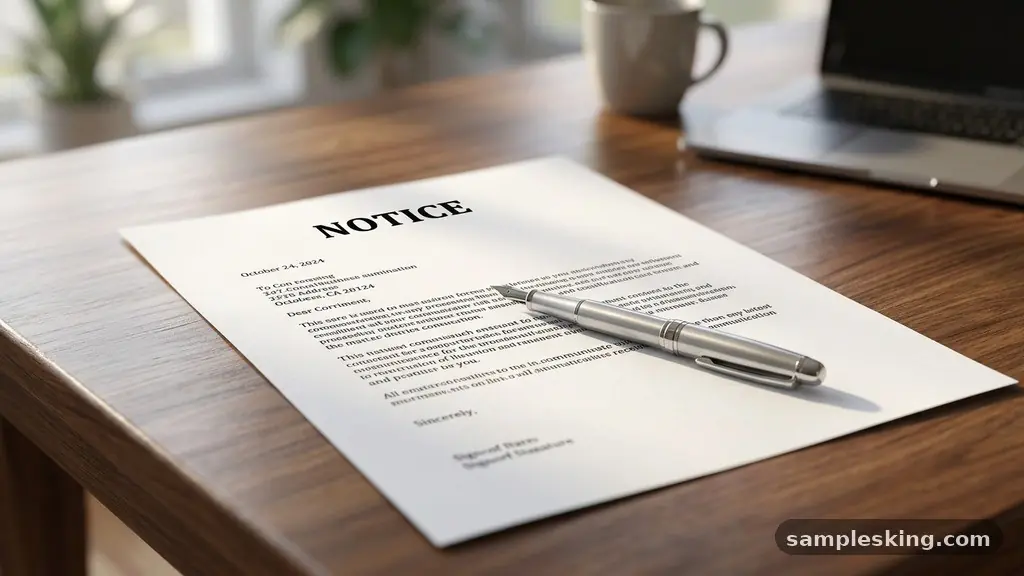
Writing a notice letter is a standard professional task that serves as a formal record for ending a commitment. Whether you are resigning from a job, ending a lease, or canceling a service, clear communication ensures that all parties understand their obligations.
By using a structured format, you protect your rights and maintain a positive reputation even as you move on to new endeavors. This article explains how to handle this process with clarity, efficiency, and professional courtesy, ensuring your intentions are documented correctly from the start.
Understanding the Core Purpose of a Notice Letter
At its heart, a notice letter provides a formal, written record of your intent to terminate a specific agreement. It acts as a bridge between the current status of an arrangement and its eventual end.
By documenting the exact date you intend to stop providing services or fulfilling a contract, you help the other party prepare for the transition. This is crucial for avoiding legal disputes or confusion regarding final payments and responsibilities.
When you engage in writing a notice letter, you are essentially creating a paper trail that serves as evidence of your compliance. Most contracts contain specific language regarding how much advance warning is required before a termination becomes final.
Failing to provide this in writing can lead to penalties, such as withheld security deposits or breach-of-contract claims. A well-crafted letter removes ambiguity and sets a clear timeline for everyone involved.
Maintaining a professional tone throughout the document is just as important as the legal details. Even if the reason for leaving is dissatisfaction, keeping the language objective and polite protects your professional integrity.
You never know when you might need a reference or when your paths might cross with the recipient again. Focus on the facts—state your intent, provide the dates, and thank the recipient for the opportunity.
Essential Components of a Formal Notice
To be effective, your correspondence must include specific data points that allow the recipient to process your request immediately. Start with your contact information and the current date at the top of the page.
Follow this with the recipient’s details, including their name, title, and the organization’s address. This ensures the letter is directed to the person responsible for handling cancellations or resignations.
The body of the letter should be concise and direct. Begin by clearly stating your purpose, such as “Please accept this letter as formal notice of my resignation.”
Immediately follow this with the exact date of your last day. If you have specific contractual obligations, such as returning company property or finishing a pending project, mention them briefly to show you are acting in good faith.
The closing should be equally professional. Express your appreciation for the time spent in the role or the service received, then sign your name clearly.
If you are sending this document via physical mail, consider using a certified mail service to ensure you have proof of delivery. This small step provides peace of mind and solidifies your record-keeping efforts.
Drafting a Resignation Notice
When you decide to leave a position, your resignation letter should focus on a smooth handoff. You are not required to provide a detailed explanation of why you are leaving, but you are expected to provide the standard notice period.
Most professional roles require two weeks, though some executive or specialized positions may require longer. Check your employment contract to confirm the exact timeline.
Keep the tone neutral and forward-looking. Instead of airing grievances, focus on how you can help the team transition during your remaining time.
You might offer to train a replacement or document your current workflows to ensure nothing is lost when you depart. This proactive approach leaves a lasting positive impression on your manager and colleagues.
Structure your resignation letter to be easily readable by HR departments. Use bullet points if you have specific tasks you intend to complete before your effective date.
Keep the document to one page. A concise letter is more likely to be processed quickly and filed correctly in your personnel folder.
Managing Lease Termination Notices
Ending a rental agreement requires a different set of priorities compared to employment. Your focus here should be on the landlord-tenant relationship and the return of your security deposit.
Most lease agreements mandate a specific notice period, often 30 or 60 days, to avoid additional fees or the loss of your deposit. Review your lease document carefully before writing your notice.
Your letter should clearly state the property address and the date you will vacate the premises. Include a forwarding address where your landlord can send your final statement and security deposit refund.
If you are moving out early, mention that you are aware of the lease terms and are coordinating with the landlord regarding potential inspections. Being transparent about your move-out process helps prevent disputes over cleaning fees or damages.
Documentation is particularly vital when ending a lease. Keep a copy of the notice letter and any correspondence regarding the move-out inspection.
If the landlord requires a specific form for lease termination, fill it out and attach it to your formal letter. This ensures that you have fulfilled all administrative requirements for ending your tenancy legally.
Canceling Service Contracts
Service cancellations often involve recurring billing cycles that must be stopped to avoid unexpected charges. When writing a notice letter for a service, identify your account number or customer ID immediately.
This allows the business to locate your file without delay. State the specific date you want the service to terminate, ensuring it aligns with the end of your current billing period.
Be aware of any auto-renewal clauses that might be hiding in your contract. Many service providers require notice well in advance of the renewal date to prevent a new contract term from starting.
If you are canceling because of a specific issue, state it briefly. If you are simply moving to a new provider, a simple notification of cancellation is sufficient.
Request a written confirmation of the cancellation once the company has processed your request. This protects you if they accidentally charge your account in the future.
If you are sending the letter via email, request a read receipt or a confirmation reply. Keep a folder of these communications until you see the final bill reflect the termination.
Standard Format Comparison
Different types of notices require different levels of detail. The following table provides a breakdown of what to include based on the type of agreement you are terminating.
| Notice Type | Key Requirement | Primary Focus |
|---|---|---|
| Employment | Notice Period | Transition and Handover |
| Lease | Move-out Date | Deposit and Inspections |
| Service | Account Number | Billing Cycle End |
| Membership | Member ID | Fee Cancellation |
Each of these formats shares the goal of clear, written communication. While the focus changes, the need for professional, documented correspondence remains constant. Using these templates as a baseline will help you maintain control over your obligations.
Best Practices for Delivery and Record-Keeping
The method of delivery is just as important as the content of the letter. For high-stakes situations like resignation or lease termination, personal delivery or certified mail is best.
This provides an objective timestamp for when the recipient received your notification. Digital delivery via email is often acceptable, but only if you receive a clear acknowledgment from the recipient.
Record-keeping is your primary defense against future claims of non-compliance. Create a dedicated folder for all your notices, including the drafted letters, sent emails, and any responses received.
If you are using physical mail, keep the tracking receipts stapled to your copy of the letter. This organized approach ensures that you can prove your actions if a dispute ever arises.
Always keep your correspondence professional, even when the recipient is uncooperative. Avoid using emotional language or accusations, as these can weaken your position in a legal setting.
Stick to the facts: what you are doing, when you are doing it, and what steps you have taken to fulfill your side of the bargain. This consistency keeps your reputation intact and your legal standing secure.
Frequently Asked Questions
Is an email sufficient for a formal notice letter?
Yes, in most modern professional contexts, an email is considered a valid form of written notification. Ensure you send it to the correct department or manager and keep a copy in your “sent” folder. If your contract specifically mandates physical mail or a handwritten signature, follow those instructions to be safe.
What happens if I miss the notice period?
Missing a required notice period can lead to financial penalties or legal consequences. In an employment context, it might affect your eligibility for rehire or your final payout. In a lease, it could result in an extra month of rent. Contact the other party immediately to explain the situation and negotiate a resolution if you have missed a deadline.
Do I need to explain why I am leaving?
You are generally not legally required to provide a reason for your resignation or cancellation. A simple statement of intent to terminate the agreement is enough. If you choose to provide a reason, keep it professional and brief to avoid any potential for future conflict or misinterpretation.
Should I hand-deliver my notice letter?
Hand-delivery is a great option if you have a good relationship with the recipient and want to ensure they receive it immediately. However, it is not required unless your contract states otherwise. If you do hand-deliver it, ask the recipient to sign a duplicate copy as an acknowledgment of receipt.
What if the recipient refuses to accept my notice?
If a party refuses to accept a validly delivered notice, you should rely on your proof of delivery. A certified mail receipt or a sent email with a read receipt serves as objective evidence that you have fulfilled your obligations. Continue to document all your attempts to notify them, and consult a legal professional if the refusal leads to a significant financial or contractual dispute.
Conclusion
Writing a notice letter is a straightforward process when you prioritize clarity and professional documentation. By focusing on the essential details like dates, account information, and your clear intent, you can protect your interests and ensure a smooth transition. Remember that the goal of this correspondence is to provide a clean break and a clear record of your actions.
Whether you are moving on from a job, a home, or a service provider, taking the time to write a thoughtful, accurate letter is always the right move. Keep your records organized and maintain a professional tone, and you will be well-prepared to handle any termination with confidence and grace.