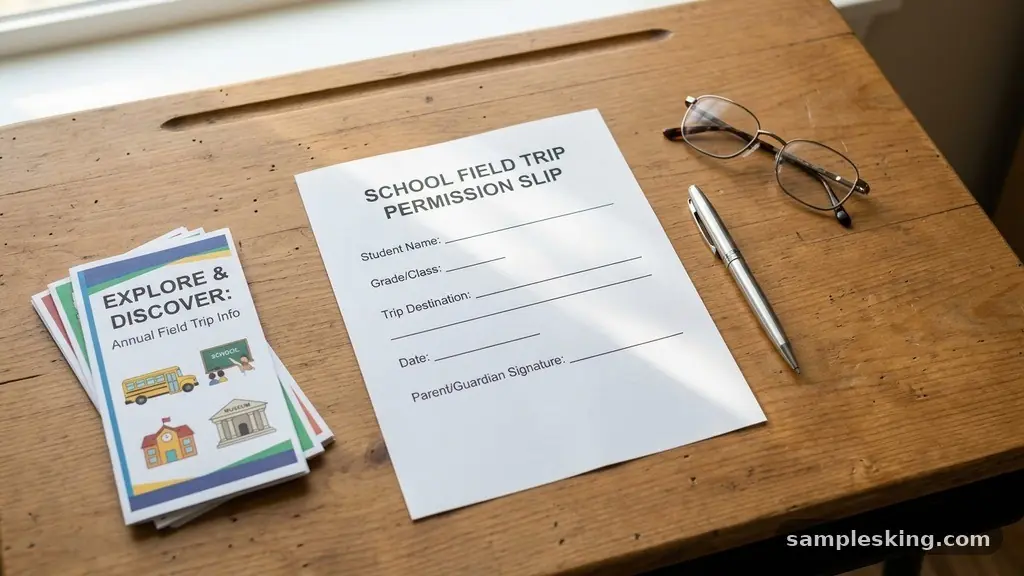
Navigating the paperwork for a field trip can feel like a chore, but having a reliable school trip permission slip template for parents makes the process much smoother. These documents serve as the primary bridge between home and school, ensuring that teachers have the necessary authorization and data to keep students safe.
By understanding what constitutes a solid, legally sound form, you can feel more confident when signing off on your child’s next adventure. Whether it is a local museum visit or an overnight camping excursion, the details captured in these slips are vital for school administration protocol and student safety alike.
Essential Components of a Permission Slip
A standard permission slip must capture more than just a signature at the bottom. To be truly effective, it needs to function as a comprehensive record that covers legal, medical, and logistical bases.
At a minimum, the document should clearly state the purpose of the outing, the departure and return times, and the specific location of the event. Without these basics, parents cannot provide true informed consent, which is the cornerstone of any school-sanctioned activity.
Beyond the logistical basics, you should look for sections dedicated to Required Student Information. This includes the full name of the student, their current grade, and a primary contact person.
If the school is using a robust template, it will also ask for an alternative contact in case the primary guardian cannot be reached during an emergency. This redundancy is a simple but essential safety measure that prevents delays in critical situations.
Medical details are arguably the most important part of the paperwork. A well-designed form will always include a section for a medical release form, allowing educators to seek emergency care if necessary.
This often includes space to list allergies, current medications, and any chronic conditions that might affect a student during physical exertion or travel. Ensuring this information is accurate is the best way to support the staff in maintaining a safe environment.
Managing Dietary and Health Needs
Every school trip presents unique challenges regarding student health profiles, particularly when it comes to food. Modern permission slips should always include a dedicated space for parents to note any specific dietary restrictions.
This is not just for allergies; it includes cultural or religious dietary requirements that the school needs to accommodate during lunch or snack breaks. When this information is collected early, it allows organizers to plan menus or inform the students about what they need to bring from home.
The student health profile section should also address non-emergency health concerns. For example, if a child requires inhalers or specific medication administration schedules, the form should trigger a conversation between the parent and the school nurse.
Many districts now require a separate, more detailed health form for overnight trips. However, the initial permission slip serves as the “flag” that alerts the administration to these needs.
Transportation and Logistics
The section detailing transportation arrangements is where many parents focus their attention. Whether the students are traveling by yellow school bus, chartered coach, or public transit, the method must be explicitly stated.
If there are variations in the return travel, such as parents being allowed to pick up students directly from the destination, this must be clearly outlined. Ambiguity here often leads to confusion at the end of a long, tiring day.
It is also common for schools to include a brief overview of the trip itinerary in the packet. While this might be a separate attachment, referencing it on the permission slip confirms that the parent has reviewed the schedule.
Understanding the timeline helps parents prepare their children for the day ahead. It also provides a clear window for when the school expects to return to campus, which is vital for planning after-school pickup or childcare.
Liability and Risk Acknowledgement
A significant portion of any formal school document is the liability waiver and risk acknowledgement. While these sections can look intimidating, they are standard components of a school district policy.
They generally clarify that the school is taking reasonable precautions while acknowledging the inherent risks of travel and off-campus activities. Signing this section indicates that you understand the nature of the trip and agree to the school’s safety procedures.
These waivers are designed to protect both the institution and the staff, but they also serve to inform parents of their own responsibilities. For instance, they may outline that students are expected to follow specific behavioral expectations throughout the duration of the outing.
If a student fails to follow these rules, the waiver often outlines the consequences, which could include being sent home at the parent’s expense. Reading this fine print is essential for managing expectations on both sides.
Defining Behavioral Expectations
Clear communication regarding student behavior is a hallmark of a well-organized school trip. The permission slip often acts as a contract between the school, the student, and the parent.
By signing, the parent agrees to support the teachers in enforcing the school’s code of conduct while away from the building. This is particularly important for overnight trips where students are away from their typical home routines.
The document should explicitly state that the school’s disciplinary policies remain in effect during the field trip. This ensures that students understand they are still representatives of their school while in public.
If there are specific rules about electronics, personal property, or social interaction, these should be referenced here. Establishing these boundaries early reduces the likelihood of misunderstandings or behavioral incidents while on the road.
Role of Chaperones and Supervision
Many parents want to know who will be looking after their children during the trip. The permission slip should provide information about chaperone requirements and the ratio of adults to students.
In many jurisdictions, there are specific mandates regarding the number of adults required per grade level. This transparency helps build trust between the school administration and the families they serve.
If the trip involves parent volunteers, the document might outline the vetting process they have undergone. This often includes background checks or specific training sessions provided by the district.
Knowing that the supervision team is qualified and prepared provides peace of mind. It also clarifies that the staff maintains ultimate authority, even when parents are present to assist with tasks.
Comparing School Trip Document Requirements
Different types of excursions require different levels of documentation. A simple afternoon trip to a local park requires less paperwork than a multi-day trip to a different city. The following table provides a breakdown of what you might expect to see based on the duration and nature of the activity.
| Trip Type | Standard Requirements | Additional Documentation |
|---|---|---|
| Local Day Trip | Basic Permission, Emergency Contact | None usually required |
| Out-of-State Trip | Medical Release, Liability Waiver | Copy of Insurance Card |
| Overnight Camp | Detailed Health Profile, Code of Conduct | Medication Authorization Form |
Each level of trip complexity increases the amount of information the school must gather. As a parent, you should be prepared to provide more detail as the scope of the trip expands. This extra effort ensures that the school has everything they need to handle any contingency while away from local medical facilities.
Frequently Asked Questions
What should I do if my child has a severe allergy?
You should immediately contact the school nurse to discuss the specific needs of your child. Ensure that the medical release form on the permission slip is filled out with precise details, and provide the school with any necessary emergency medication, such as an EpiPen, well in advance of the departure date.
Is it mandatory to sign the liability waiver?
In most cases, a signed permission slip including the liability waiver is a prerequisite for participation in the trip. If you have concerns about the language in the waiver, it is best to speak directly with the school administration to clarify the policy and your rights.
Can I refuse to provide my home phone number?
While you can request to provide alternative contact methods, school administration protocol typically requires an emergency contact number that is reachable at all times during the trip. Providing this information is critical for the safety of your student, and you should ensure it is a number where you can be reached immediately.
What happens if I forget to return the slip on time?
Schools have strict deadlines to organize transportation and staffing based on the number of confirmed attendees. If you miss the deadline, your child may be unable to attend the trip because the school cannot account for them in the final safety planning. Always aim to return these forms as soon as you review them.
Where can I find more information on school trip safety standards?
You can often find detailed information regarding your specific school district’s safety guidelines on their official website. If you are looking for broader educational standards, the National Education Association provides resources and insights into school policies and student safety during extracurricular activities.
Best Practices for Parents
When you receive a school trip permission slip template for parents, take the time to read it thoroughly rather than just signing the bottom line. Check that all contact information is current, especially if you have recently moved or changed your phone number.
Keeping your data updated is the single most helpful thing you can do for the teachers organizing the event. If you have any questions about the safety measures, do not hesitate to reach out to the trip coordinator before the deadline.
Planning ahead is the best strategy for a stress-free experience. Keep a digital or physical copy of the signed slip for your own records, noting the departure and return times. If your child requires medication, ensure the pharmacy labels are clear and that you have followed the school’s specific protocol for handing over those items.
By being proactive and organized, you help ensure the trip is both safe and enjoyable for everyone involved. Feel free to share this information with other parents in your school community to help ensure everyone is on the same page.