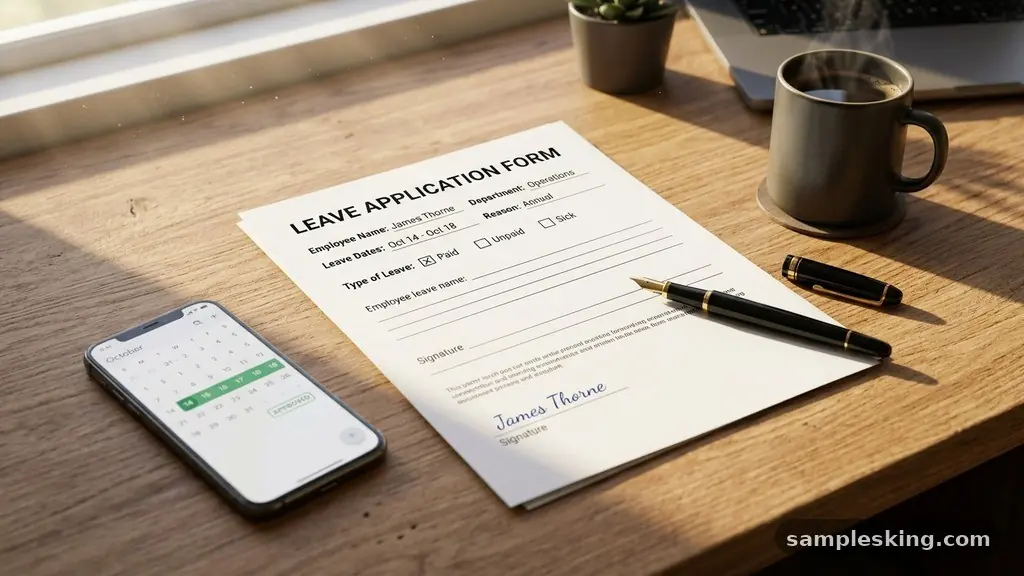
Writing effective leave application samples for school and office environments is a fundamental skill that ensures your absences are handled professionally. Whether you are a student requesting time off for an appointment or an employee planning a vacation, your communication sets the tone for how your request is received.
By providing clear details, maintaining a polite tone, and submitting your request well in advance, you show respect for your institution’s schedule and your supervisor‘s time. This article explores how to craft these messages effectively to ensure your time off is approved without unnecessary friction or confusion.
Core Components of a Successful Leave Request
Every successful application for time off relies on a few non-negotiable elements that ensure the recipient understands the situation immediately. First, you must clearly state the purpose of your leave, whether it is for a medical issue, a family emergency, or a planned vacation.
Ambiguity often leads to follow-up questions that delay the approval process. Always include the exact start date and end date of your intended absence so that the school or office can plan accordingly.
Beyond the dates, you should mention your current leave balance if you are in a corporate setting. Many HR departments require you to track your own time off, and confirming that you have sufficient days remaining saves everyone time.
If you are a student, your focus should be on how you plan to manage missed coursework. Demonstrating that you have a plan to catch up shows maturity and accountability to your teachers or school principal.
Finally, include your contact details or a clear statement about your availability during the period. If you are reachable for emergencies, specify how you prefer to be contacted.
If you will be completely offline, state that clearly to manage expectations. Keeping these components consistent across all your professional correspondence makes your requests predictable and easy for administrators to process.
Structuring Requests for the Workplace
When you draft a professional leave request for your office, the structure should reflect the company’s culture while remaining formal. Most supervisors appreciate a concise email that gets straight to the point without unnecessary fluff.
Start with a clear subject line that includes your name and the nature of the request, such as “Leave Request – [Your Name] – [Dates].” This allows the recipient to archive and track your request efficiently.
The body of the email should be polite but direct. You do not need to provide exhaustive personal details regarding a medical condition or a private matter. Instead, focus on the operational impact of your absence.
Mention who will be covering your primary duties or confirm that your current projects are up to date before you depart. This proactive approach alleviates the supervisor’s concern about lost productivity.
If you are requesting a long-term leave of absence, you should schedule a face-to-face meeting or a video call before sending the formal email. The written request should then serve as a summary of what you discussed.
Always refer back to your company’s HR policy to ensure your request aligns with the official procedures for documentation. Following these steps ensures your request is handled with the seriousness it deserves.
Communicating with Educational Institutions
Students and parents often need to communicate with a school principal or a classroom teacher regarding absences. Unlike the corporate world, the focus here is on academic continuity and attendance compliance.
When writing to a school, prioritize clarity regarding the specific dates and the reason for the absence. If the absence is due to a medical appointment, mention whether a medical certificate will be provided upon your return.
Teachers are primarily concerned with how an absence affects a student’s progress in the curriculum. Include a sentence about your commitment to completing assignments or reviewing missed lecture notes. You can find helpful resources on managing school attendance expectations through the U.S.
Department of Education website. This shows the school that you take your education seriously, even when you cannot be physically present in the classroom.
Keep the tone respectful and professional, especially when addressing administrative staff. If you are a parent writing on behalf of a child, maintain a collaborative tone that assumes the school wants to support the student’s success.
Avoid demanding time off; instead, frame the request as a notification of a necessary absence. This cooperative attitude helps build a positive relationship with school staff.
Managing Sick Leave Emails Effectively
The sick leave email is a unique type of correspondence because it is often written under duress or while you are feeling unwell. The key is to keep it short, informative, and sent as early as possible.
You should avoid over-explaining your symptoms, as most supervisors only need to know that you are unfit for duty. A simple statement confirming you will be away for the day is usually sufficient.
If your illness is expected to last longer than one day, provide an estimated return to work date. This helps your team adjust their expectations and reassign urgent tasks if necessary.
If you are waiting for a doctor’s visit, let your supervisor know you will provide an update once you have more information. This transparency prevents the need for constant check-ins while you are trying to recover.
Always ensure that you are following the specific reporting requirements of your organization. Some companies require a phone call in addition to an email, or perhaps an entry in a digital HR portal.
Missing these steps can cause administrative headaches for your manager. By staying diligent with these small protocols, you ensure your sick leave is processed accurately and without issue.
Comparison of Leave Request Formats
Understanding the subtle differences between various types of leave applications helps you choose the right tone for the situation. While a personal leave request might be slightly more flexible, a formal leave request for an extended period requires rigorous adherence to documentation. The following table highlights the common differences in approach and preparation for different leave types.
| Leave Type | Primary Focus | Key Requirement | Notification Time |
|---|---|---|---|
| Vacation | Handover of tasks | Approval of schedule | 2–4 weeks |
| Sick Leave | Availability update | Medical certificate | As early as possible |
| Personal/Emergency | Brief explanation | Urgency acknowledgement | Immediate |
| Academic/School | Missed work plan | Principal notification | 1 week in advance |
Standardizing Your Correspondence
Consistency in your writing helps your supervisors or teachers recognize your requests quickly. You should develop a personal template that you can adapt based on the situation.
Your template should include a professional greeting, a clear statement of the dates, a brief mention of your plan for coverage or missed work, and a polite closing. Having a reliable structure prevents you from forgetting important details when you are in a rush.
However, avoid making your emails sound like robotic form letters. A touch of personalization goes a long way in maintaining a good rapport with your team or faculty.
For example, if you are requesting time off for a family event, a brief mention of the occasion adds a human element. Just ensure that the core information remains easy to find and read.
Remember that your written communication is a reflection of your professional habits. A well-structured request demonstrates that you are organized and considerate of others.
Even if your workplace is informal, maintaining a level of professionalism in your leave requests will only help your reputation. Over time, this consistency makes the approval process smoother and more predictable for everyone involved.
Navigating HR Policy and Documentation
Every organization has its own specific HR policy regarding time off, and ignoring these rules can lead to rejected requests. Before you send any application, check your employee handbook or student code of conduct.
You need to know the specific channels for submission, whether that is a direct email to a supervisor, a form on an intranet site, or a formal letter to the administration. Understanding the rules demonstrates that you respect the institution’s structure.
Documentation is particularly important for extended absences. If you are taking a medical leave, ensure you have a valid medical certificate ready to submit.
If you are taking personal leave, be aware of whether you need to provide extra lead time or specific justifications. HR departments are bound by regulations that require them to maintain accurate records, so providing the right paperwork is a service to them.
If you ever feel unsure about the process, reach out to your HR representative or the school office before you draft your request. Asking for clarification early on prevents errors and demonstrates that you are trying to comply with the rules.
Being proactive about these administrative details saves you from potential stress later on. It also ensures that your leave is recorded correctly in the system.
Checklist for a Complete Leave Application
To ensure no request is ever denied due to missing information, use this checklist before you hit send. These points cover the essential bases for any school or office environment. If you follow these, your requests will consistently meet professional standards and provide all necessary information for approval.
- Include a clear and descriptive subject line for email requests.
- State the exact start date and end date of your absence.
- Mention your current leave balance if required by company policy.
- Outline your plan for task coverage or missed academic coursework.
- Attach any necessary documentation, such as a medical certificate.
- Specify whether you will have limited or no access to communication.
- Submit the request well before the required notice period.
- Confirm receipt of the request if you do not hear back within a reasonable time.
Frequently Asked Questions
How far in advance should I submit a vacation request?
Most professional environments require at least two to four weeks of notice for vacations. This allows your supervisor enough time to arrange for coverage and ensure that your absence does not disrupt ongoing projects. If you are planning a trip during a busy season, providing even more lead time is considered a best practice.
Is it necessary to provide a reason for personal leave?
You are generally not required to provide exhaustive personal details, but you should provide a general category for the leave. Phrases like “personal matter,” “family commitment,” or “medical appointment” are usually sufficient. Keep your explanation professional and focus on the logistical aspects of your absence rather than the private details of your life.
What if my leave request is denied?
If your request is denied, remain calm and ask for a brief meeting to understand the reasoning. There may be a conflict with a major project or a staffing shortage that you were unaware of. Express your willingness to be flexible, perhaps by shifting your dates or finding a compromise that accommodates the needs of the office or school.
How do I handle an emergency that requires immediate leave?
In an emergency, prioritize contacting your supervisor or the school office as quickly as possible through the most direct method available. A phone call is often better than an email in these situations. Once the immediate crisis is addressed, follow up with a formal written request to ensure your absence is documented properly for administrative purposes.
Should I check my email while on leave?
Unless you have explicitly agreed to be available for urgent matters, it is generally best to disconnect while on leave. Setting an out-of-office autoresponder helps manage expectations by letting others know you are unavailable and providing the contact information of a colleague who can assist in your absence.
Final Thoughts
Mastering the art of writing effective leave application samples for school and office settings is an essential part of maintaining a healthy professional life. By focusing on clarity, timing, and a respectful tone, you ensure that your requests are handled efficiently and without unnecessary conflict. Remember that your goal is to make the process as easy as possible for those who need to approve your time off.
Whether you are navigating a simple sick day or planning a significant leave of absence, your communication reflects your commitment to your responsibilities. Start by implementing these practices in your next request, and you will likely find that your time off is approved with much greater ease. Keeping your records organized and your communication professional will serve you well throughout your career or your academic journey.