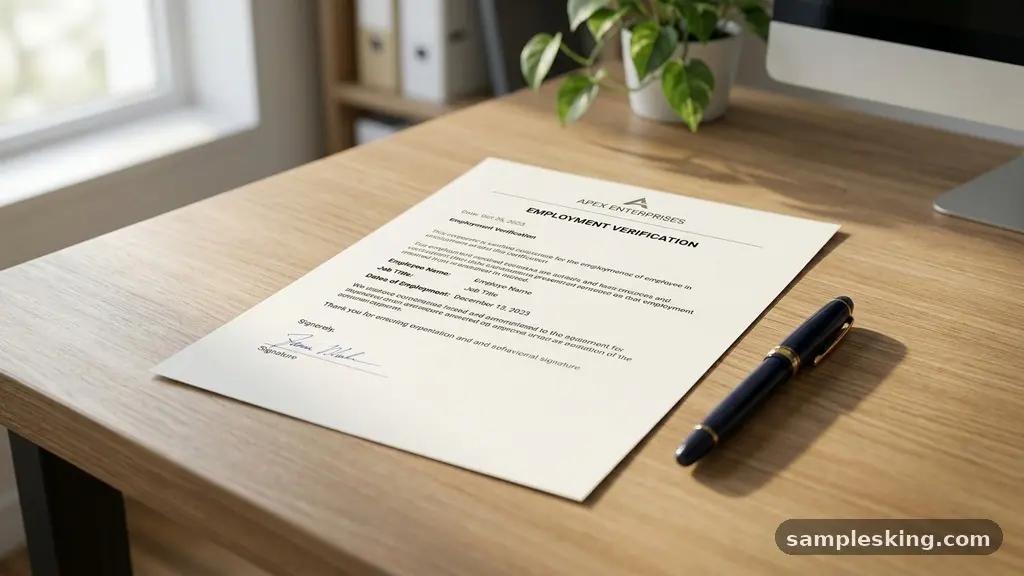
Finding a reliable work experience certificate format with a sample is the first step toward documenting your professional history for future employers. This document serves as a formal validation of your past roles and is essential for background checks and career advancement. When you prepare your documentation correctly, you ensure your transition between companies remains professional and transparent.
This article provides the structural components and a concrete example to help you draft an effective document. By following these professional standards, you will present your employment history with clarity and confidence, ensuring that your records meet the expectations of modern human resources departments.
Understanding the Purpose of Employment Verification
Employment verification is a critical part of the hiring process that confirms an individual’s claims regarding their past work history. Companies often require this to validate the duration of your stay at previous firms and the specific roles you held. A well-structured certificate provides objective proof that you were indeed an employee, leaving no room for ambiguity during the background screening phase.
When you request this document from your previous employer, you are essentially asking for a professional endorsement of your service tenure. It acts as a bridge between your past performance and your future prospects.
HR departments rely on these documents to maintain the integrity of their hiring pipeline. Without this verification, recruiters might struggle to confirm the accuracy of your resume, potentially delaying your onboarding process.
Core Components of a Professional Certificate
Every formal employment letter must include specific identifiers to carry weight in a corporate environment. The document should always be printed on company letterhead to signify its authenticity and origin. Without the official branding of the organization, the letter may be dismissed as an unofficial or falsified document by potential new employers.
The following elements are non-negotiable for a standard document:
- The full name of the employee as it appears in company records.
- The official job title held by the employee during their tenure.
- The exact date of joining and the date of resignation or exit.
- A brief, professional summary of the roles and responsibilities performed.
- The official company seal to confirm the document’s legal standing.
- Contact information for the HR department to facilitate future inquiries.
Drafting the Document on Official Letterhead
The visual presentation of your certificate matters as much as the content itself. Using the company letterhead is the industry standard because it immediately identifies the source of the communication. It provides contact details, a physical address, and the organization’s registration number, which are vital for verification purposes.
When you draft this document, ensure the layout is clean and follows standard formal business correspondence rules. Avoid decorative fonts or cluttered designs that distract from the factual information provided.
The goal is to create a document that looks professional and fits seamlessly into a personnel file. If you are an HR representative drafting this for a departing employee, verify that the header matches the current corporate branding guidelines.
Standard Roles and Responsibilities
Describing your job description is the most important section of the certificate for showing your professional growth. You should avoid overly flowery language and instead focus on the core duties you were responsible for during your tenure. Use action-oriented verbs that highlight your contributions to the team and the organization.
For example, instead of saying you “helped with sales,” state that you “managed account portfolios and exceeded quarterly sales targets by 15%.” This specificity allows the next employer to understand your impact immediately.
If you held multiple titles, list them chronologically to show your progression within the company. Keeping this section concise ensures that the reader can scan the document and grasp your capabilities within seconds.
Managing the Exit and Notice Period
The way a certificate acknowledges your departure says a lot about your professional exit. It is common practice to mention that the employee served their full notice period as required by the contract. This signals to future employers that you are a reliable professional who respects contractual obligations and handover processes.
If you were involved in any special projects or transitions before leaving, you might include a brief note about the successful completion of these tasks. Avoid including details about the reasons for leaving, such as personal conflicts or internal disputes.
Keep the focus on your tenure, your professional conduct, and your contributions to the firm. This neutral, factual approach is the hallmark of a professional document.
Sample Certificate Template
To see how these elements come together, consider the following template. You can adapt this structure to meet the specific requirements of your organization or industry. Ensure that the signatory authority is someone authorized by the company to issue such documents, such as an HR manager or department head.
| Component | Description |
|---|---|
| Header | Company Name, Logo, Address, and Contact Info |
| Salutation | To Whom It May Concern |
| Body Paragraph 1 | Employee name, dates of service, and designation |
| Body Paragraph 2 | Core responsibilities and key achievements |
| Conclusion | Wish for future success and sign-off |
[Company Letterhead]
Date: October 24, 2023
To Whom It May Concern,
This is to certify that Mr. John Doe was employed with ABC Solutions as a Senior Project Manager from January 12, 2018, to September 30, 2023. During his tenure, he was responsible for leading cross-functional teams, overseeing budget allocations, and ensuring the timely delivery of software solutions.
John consistently demonstrated strong leadership skills and technical expertise in his role. He served his notice period in full and fulfilled all exit formalities according to company policy. We wish him the very best in his future professional endeavors.
Sincerely,
[Signature]
Jane Smith, HR Manager
[Official Company Seal]
The Role of the Signatory Authority
The validity of a certificate often hinges on who signs it. In a large organization, this is typically handled by the HR department, which has access to the official personnel files. The signature must belong to someone with the authority to verify employment data, ensuring that the information provided is legally defensible.
If a potential employer calls to verify the information, they will likely ask to speak to the person who signed the document. This is why it is vital to include the contact information of the HR representative or the department responsible for records.
A document signed by a direct supervisor may be acceptable, but one signed by an HR official carries more weight in formal background checks. Always ensure the signature is original and accompanied by an official company seal.
Common Mistakes to Avoid
Many people overlook small details that can cause problems later. One common error is failing to include the exact dates of employment, which creates a gap in the timeline that recruiters will inevitably question. Another mistake is using informal language that lacks the professional tone required for official business correspondence.
Ensure that the document is free of typos and grammatical errors, as these can reflect poorly on both the employee and the company. Another issue arises when the certificate mentions sensitive information, such as salary details or reasons for termination.
Keep the content focused strictly on employment dates, titles, and general responsibilities. For more information on professional documentation standards, you can review the Society for Human Resource Management resources.
Frequently Asked Questions
Is it necessary to include the reason for leaving?
No, you should never include the reason for leaving a job in a formal certificate. Keep the document strictly factual by focusing on dates, titles, and duties.
Can I write my own experience certificate?
While you can draft the content for your employer to review, the final document must be printed, signed, and stamped by the company. You cannot issue it yourself, as it would lack the necessary authority.
What if my company has closed down?
If the company is no longer in operation, you may need to provide alternative proof of employment. This can include pay stubs, tax records, or a letter from a former manager or supervisor who can verify your tenure.
How long should a certificate be?
A professional certificate should be concise, typically fitting on a single page. It should be long enough to cover your responsibilities but short enough to be read in under one minute.
Does the certificate expire?
Experience certificates do not have an expiration date. However, they are most useful when they are recent, as they provide a snapshot of your most recent professional history.
Final Thoughts on Documentation
Securing a proper work experience certificate format with a sample is a straightforward task that yields significant benefits for your career. By ensuring your documentation is accurate, professional, and properly validated, you remove obstacles during the hiring process. These documents serve as a testament to your hard work and provide the necessary proof that recruiters require to move your application forward.
Always keep your original certificates in a secure place, as you may need them years down the line for background verification. If you find yourself in need of a new document, reach out to your former HR department with a clear, polite request that outlines exactly what you need. Taking these steps today protects your professional reputation and keeps your career path clear for future opportunities.