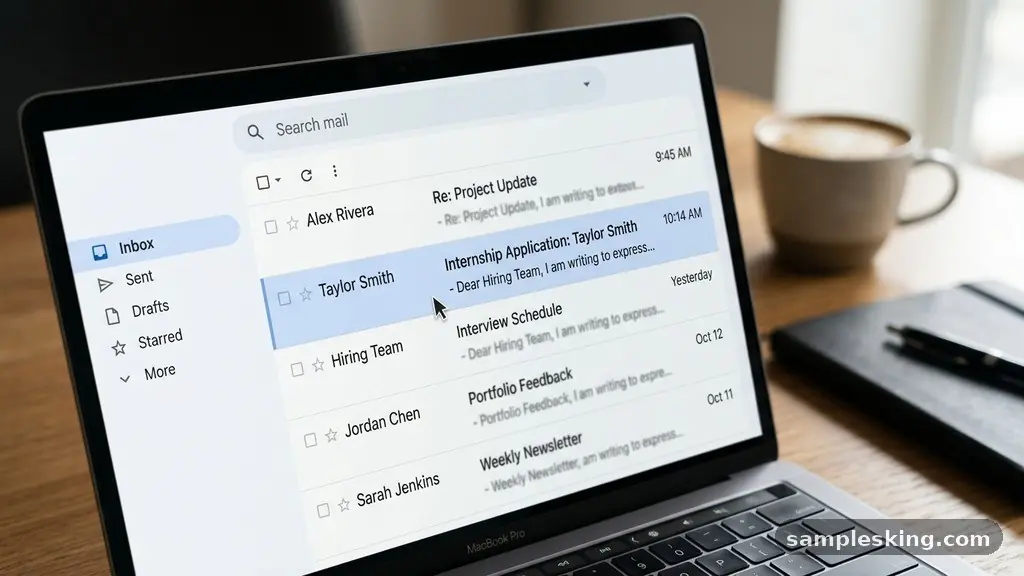
Finding the right internship requires more than just a polished resume; it demands a clear, professional communication strategy. Many students struggle to bridge the gap between academic life and professional outreach, often missing opportunities simply because their initial contact lacks clarity. Using effective internship application email samples for students can help you articulate your value proposition quickly and respectfully.
By mastering the art of the cold email, you demonstrate initiative and professional etiquette before you even step into an interview. This article provides actionable insights and specific templates to ensure your application stands out in a crowded inbox.
The Anatomy of a Perfect Subject Line
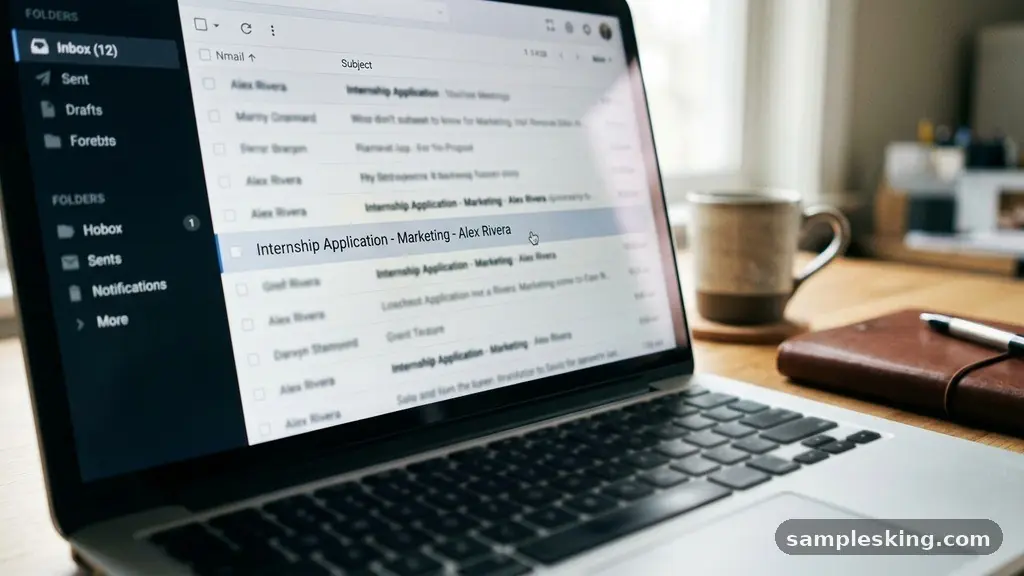
The email subject line is your first and most critical point of contact with a hiring manager. If your subject line is vague or generic, there is a high probability your message will be overlooked or deleted. You must balance professionalism with enough intrigue to encourage an open, while remaining clear about your intent.
Avoid using “Hello” or “Internship Inquiry” as these lack specificity and urgency. Instead, include the position title and your primary qualification, such as your university or a specific project. A hiring manager scanning dozens of emails per hour will prioritize messages that clearly state the sender’s purpose and status.
Consider these structural elements for an effective subject line:
- Include the specific role title if you are applying to a posted opening.
- Mention your current university or major to establish your student status.
- Use a reference to a mutual contact if you have one, as this significantly increases open rates.
- Keep the character count under 50 to ensure it displays fully on mobile devices.
Drafting Your Opening Statement
Your opening sentence sets the tone for the entire interaction and determines whether the recipient continues reading. Avoid starting with “My name is” as this is redundant information already found in your email signature. Instead, lead with why you are interested in their specific company or the work they produce.
Focus on a recent project, a public company achievement, or a shared value that draws you to their organization. Showing that you have done your research demonstrates genuine interest rather than a mass-email approach. This level of personalization is what separates a successful candidate from a generic applicant.
Keep the opening brief and focused on the recipient’s perspective. You want to acknowledge their time and establish a professional connection immediately. If you have been referred by someone, mention that connection in the first two sentences to build instant credibility.
Showcasing Your Skill Set and Experience
When you describe your background, avoid simply listing items from your resume. Instead, focus on the intersection of your academic learning and the practical needs of the company. Mention specific tools, languages, or methodologies that align with the internship description.
If you lack extensive industry experience, emphasize your capacity to learn and your commitment to high-quality output. Use concrete examples of class projects or extracurricular leadership roles that required similar skills to those listed in the job posting. This bridge between theory and practice is vital for students.
Structure your middle paragraphs to highlight how you can solve a problem for them. Hiring managers are looking for interns who can take tasks off their plates, not just those who need constant supervision. Frame your experience as a resource that will help their team succeed during the busy season.
Professional Etiquette in Email Correspondence
Professional etiquette is not just about being polite; it is about respecting the recipient’s time and workflow. Use a formal salutation such as “Dear [Name]” rather than casual greetings like “Hi guys” or “Hey.” If you cannot find a specific name, use “Dear [Department] Hiring Manager” instead of a generic “To Whom It May Concern.”
Ensure your resume attachment is saved with a professional naming convention, such as “FirstName_LastName_Resume.pdf.” Never send a file named “Resume_Final_v2.docx” as it looks disorganized and unprofessional. A PDF format is the industry standard because it preserves your formatting across different operating systems.
Proofread your message at least three times before hitting send. Check for typos in the company name, the hiring manager’s name, and any specific details you included about their business. These small details signal to the employer that you are detail-oriented and take your professional growth seriously.
When to Use a Cold Email Approach
A cold email is a powerful tool when you are targeting a company that has not explicitly posted an opening. It shows that you are proactive and genuinely interested in their specific brand or mission. Many internships are created based on a student reaching out at the right time with a strong portfolio.
Target specific people rather than sending your email to a general “info@” address. Use tools like LinkedIn to identify the department head or a team lead in the area where you hope to work. Addressing your message to a person with decision-making power increases your chances of getting a response.
Keep your cold email shorter than a standard application. Acknowledge that you are reaching out without a formal posting, express your admiration for their work, and ask if they are open to a brief conversation. This low-pressure approach is often more effective than a formal, rigid application.
Comparing Application Strategies
Choosing the right approach depends on the company size and industry. Use the table below to decide whether a formal application or a networking-focused email is more appropriate for your target internship.
| Strategy | Best For | Key Advantage |
|---|---|---|
| Formal Application | Large corporations, structured programs | High volume, clear timeline, predictable process |
| Cold Outreach | Startups, small agencies, niche firms | Personal connection, less competition, flexibility |
| Referral Email | Any company with a contact | High trust factor, bypasses initial screening |
The Importance of the Call to Action
Every email you send should conclude with a clear call to action. Do not leave the recipient guessing about what you want them to do next. If you are applying for a posted role, state that you have attached your materials and look forward to hearing about next steps.
If you are sending a cold email, ask for a brief, 10-minute informational interview or a quick chat about their team. Keep the request manageable and low-pressure. If they say no, thank them for their time and leave the door open for future opportunities.
Avoid being overly demanding or setting arbitrary deadlines. Phrases like “I expect to hear back by Friday” are aggressive and unprofessional. Instead, express your enthusiasm and your willingness to provide any additional information they might need to evaluate your candidacy.
Following Up Without Being Annoying
Following up is an essential part of the process, yet many students abandon their efforts after one ignored email. If you haven’t heard back within seven to ten business days, a polite follow-up is perfectly acceptable. This shows persistence and genuine interest in the role.
Keep your follow-up email short and reference your original message. You might say, “I am writing to follow up on my previous email regarding the internship position and to reiterate my interest in the team.” Do not guilt-trip the recipient for not replying; assume they are busy.
If you do not hear back after a second attempt, it is time to move on. Focus your energy on other opportunities that are showing engagement.
For more advice on how to manage your career path and professional outreach, you can review the guidance provided by the U.S. Department of Labor regarding internship programs.
Frequently Asked Questions
How long should my internship application email be?
An effective email should be concise, ideally between 150 and 250 words. You want to provide enough context to be interesting, but not so much that the reader loses interest. Focus on your value proposition and your enthusiasm for their specific projects.
Should I include my GPA if it isn’t perfect?
Only include your GPA if the company specifically requests it or if it is exceptionally high. Most hiring managers value relevant skills and project experience far more than a number on a transcript. Focus your limited space on highlighting what you can actually do for them.
What if I don’t have any previous internships?
Highlight your academic projects, volunteer work, or extracurricular leadership roles instead. Frame your lack of industry experience as a “fresh perspective” and emphasize your quick learning curve. Every professional had to start somewhere, and employers look for potential as much as past performance.
Is it okay to use an email template?
Templates are helpful for structure, but you must customize them to avoid sounding robotic. Use a template to organize your thoughts, but rewrite the specific details to fit the company and the role. A generic, copy-pasted email is usually easy for a recruiter to spot.
How do I handle a rejection?
Always respond to a rejection with grace and professionalism. Thank them for considering your application and express your desire to stay in touch for future opportunities. Maintaining a positive relationship can lead to unexpected openings down the road.
Final Thoughts on Your Outreach
Mastering the art of the email application is a skill that will serve you throughout your career. By keeping your communication clear, professional, and tailored to the recipient, you significantly improve your chances of securing the role you want. Use the internship application email samples for students provided here as a starting point, but always ensure your unique personality and genuine interest shine through.
Consistency and attention to detail are your greatest assets during this process. Stay persistent, keep refining your approach, and don’t be afraid to reach out to professionals who inspire your career goals. Your next big opportunity may be just one well-crafted email away.